

Authors: V. Aparna (BAERI/LMSAL), Sanjiv K Tiwari (BAERI/LMSAL), Ronald Moore (NASA/ MSFC), Navdeep Panesar (BAERI/LMSAL), Bart De Pontieu (LMSAL), Thomas Wiegelmann (MPS, Germany)
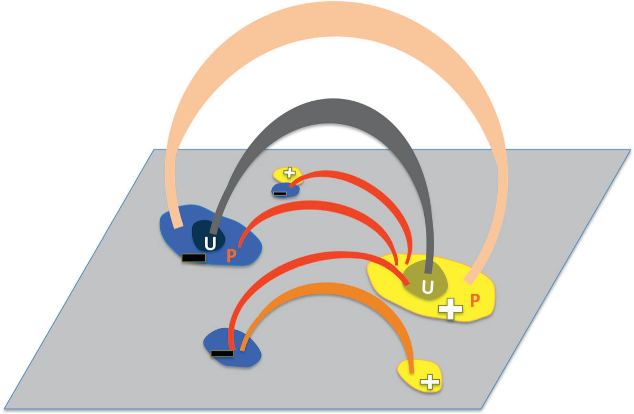
Based on the results from Tiwari et al. 2017, we investigate the importance of magneto-convection in heating active region (AR) coronal loops. They found via SDO/AIA observations and NLFFF extrapolations that loops connecting sunspot umbrae are invisible in EUV images and those with one loop footpoint in sunspot umbra or penumbra and the other footpoint in opposite-polarity sunspot penumbra or plage regions, are seen as bright and hot loops. They conclude that a combination of the magnetic field strength of the regions the loops are rooted in and the convective freedom of the regions play an important role in determining the amount of heating in these loops. Here, we aim to understand the statistical significance of the above findings. We select a sample of three kinds of ARs- those having a pair of sunspots, those with a sunspot in the leading polarity and a plage in the trailing polarity, and those that have no sunspot in any polarity. Using AIA images, we select ARs that have not produced flares stronger than a B-class in a duration of 48hours. We select the instances where bright loops are present and use the nearest SDO/HMI SHARP vector-magnetograms in time to perform NLFFF extrapolations. We also perform differential emission measure calculations at these times using AIA images to verify the temperature characteristics. Using several ARs we plan to derive a realistic scaling law that includes “invisible” loops connecting sunspot umbrae inferred from the extrapolations. References Tiwari et al., 2017, ApJL, 843, L20