Developing the Michigan Sun-to-Earth Model
Authors: Gabor Toth (University of Michigan) As part of the Space Weather with Quantified Uncertainty program, our project, funded by NSF, has been working onView More

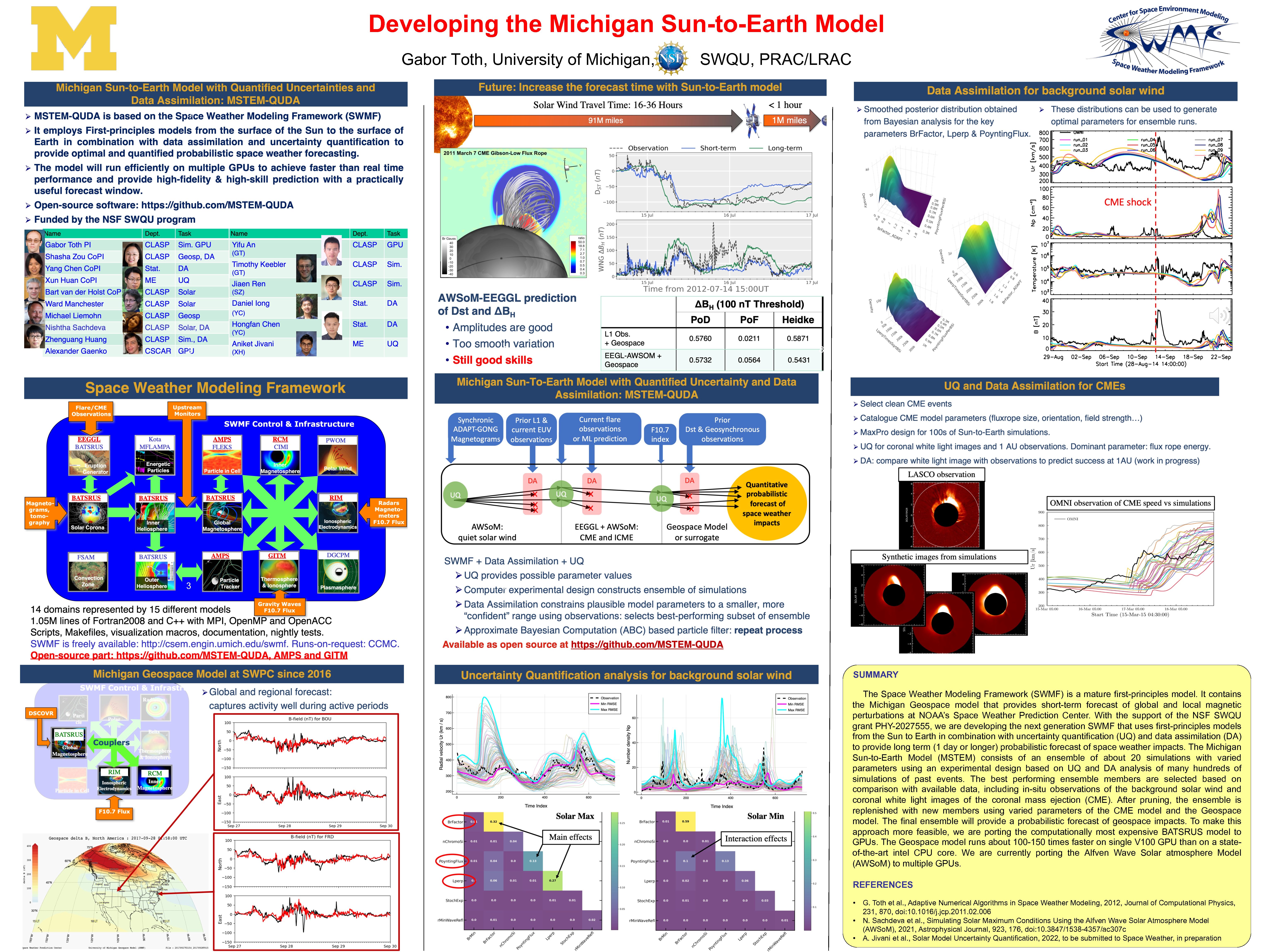
Authors: Gabor Toth (University of Michigan) As part of the Space Weather with Quantified Uncertainty program, our project, funded by NSF, has been working onView More
Authors: I. Kitiashvili (NASA Ames Research Center), A. Wray (NASA Ames Research Center), V. Sadykov (Georgia State University), A. Kosovichev (New Jersey Institute of Technology/NASAView More
Authors: Christopher S. Moore (Harvard|Smithsonian Center for Astrophysics), MinXSS Team Solar flares accelerate particles on timescales of minutes, converting magnetic energy to thermal, radiative andView More
Authors: Nariaki Nitta (LMSAL), Meng Jin (SETI/LMSAL), Christina Cohen (Caltech) In the commonly used classification scheme of solar energetic particle (SEP) events, particles in gradualView More
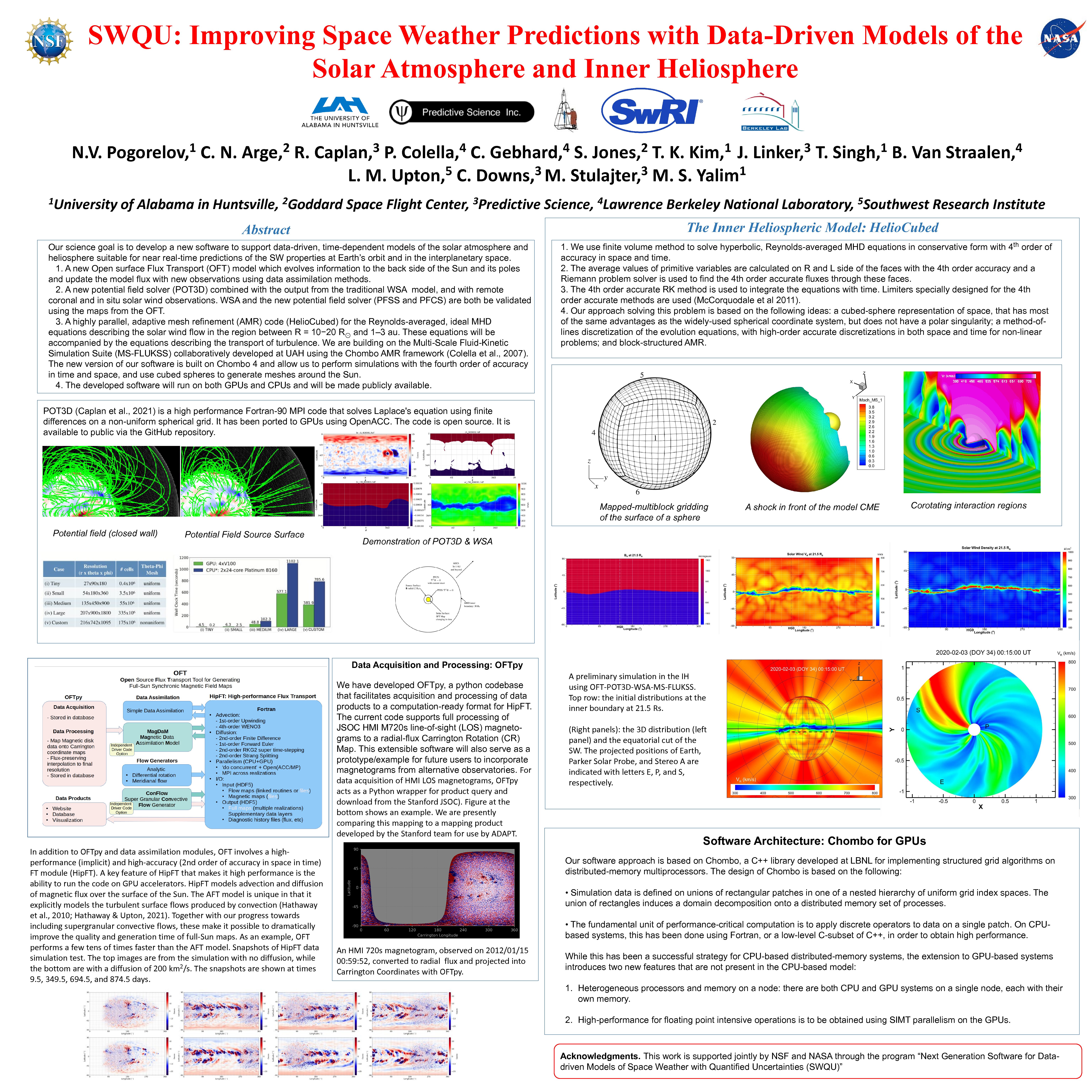
Authors: N.V. Pogorelov (University of Alabama in Huntsville), C.N. Arge (NASA Goddard Space Flight Center), P.C. Colella (Lawrence Berkeley National Laboratory), J. Linker (Predictive ScienceView More
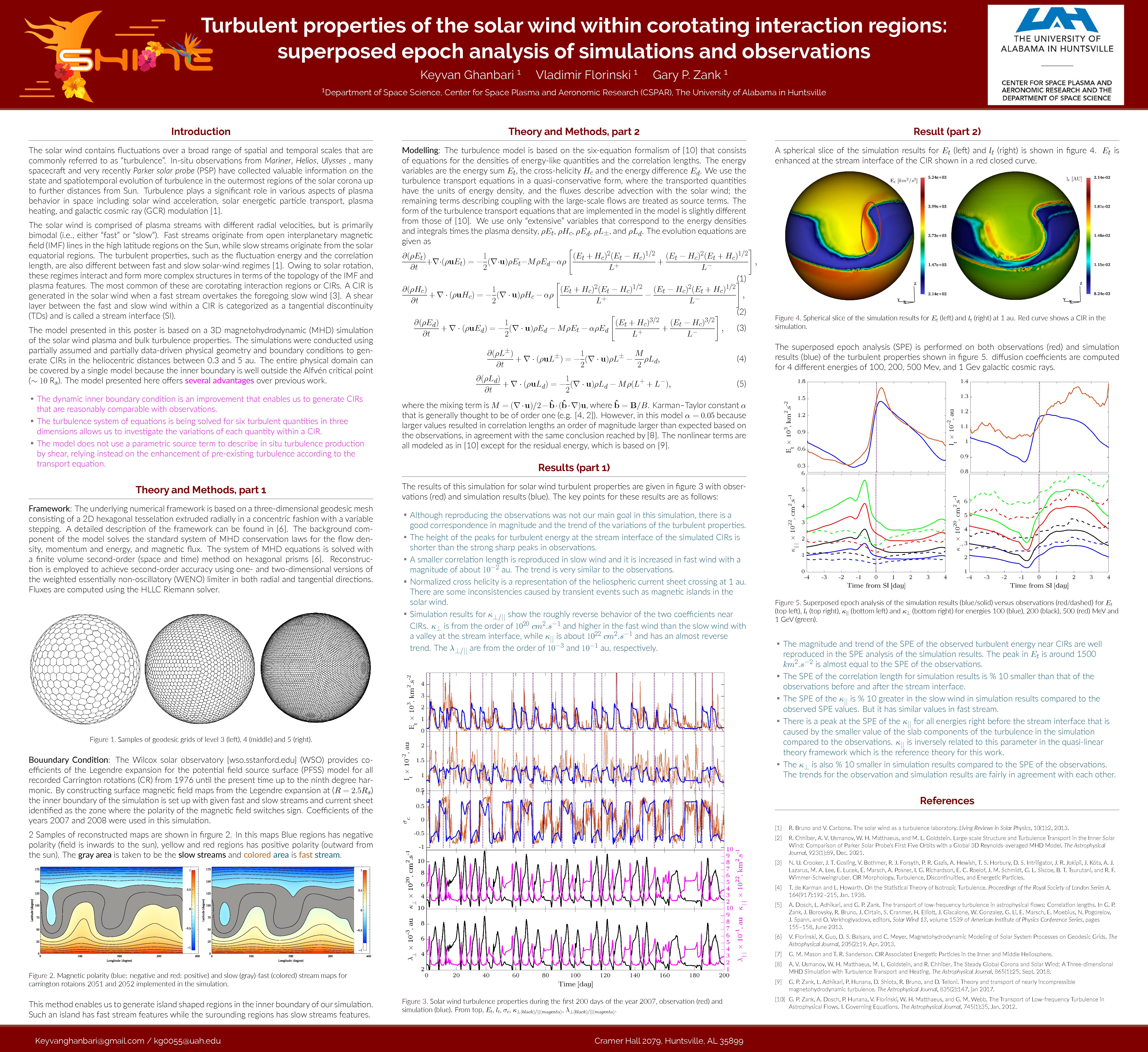
Authors: Keyvan Ghanbari (University of Alabama in Huntsville), Vladimir Florinski ( the university of Alabama in Huntsville), Gary P. Zank ( the university of AlabamaView More
Authors: Maxim Kramar (University of Hawaii at Manoa), Haosheng Lin (University of Hawaii at Manoa) The coronal magnetic field is important driving force for transientView More
Authors: Junxiang Hu (UAH), Gang Li (UAH) This work showcases the nowcasting and forecasting capabilities of the operational version of the iPATH (improved Particle AccelerationView More
Authors: Laurel Farris (New Mexico State University), Sean Sellers (New Mexico State University), James McAteer (New Mexico State University) The 3-minute oscillations that dominate theView More
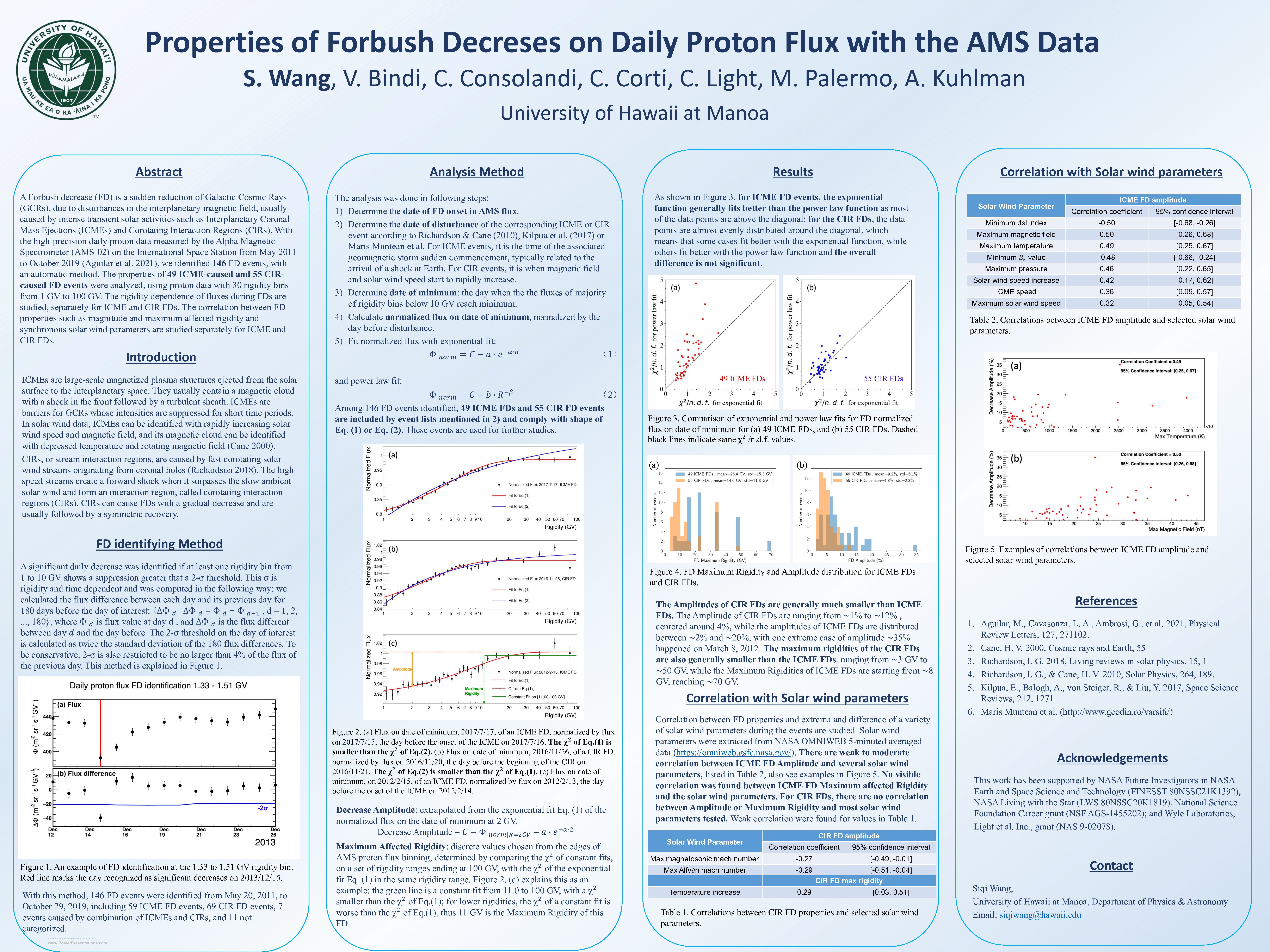
Authors: Veronica Bindi (University of Hawaii at Manoa), Cristina Consolandi (University of Hawaii at Manoa), Claudio Corti (University of Hawaii at Manoa), Chris Light (UniversityView More
Authors: Yi-Hsin Liu (Dartmouth College), Yi Qi (University of Colorado Boulder), and C. T. Russell (UCLA) What mechanisms dissipate energy in plasma turbulence is anView More
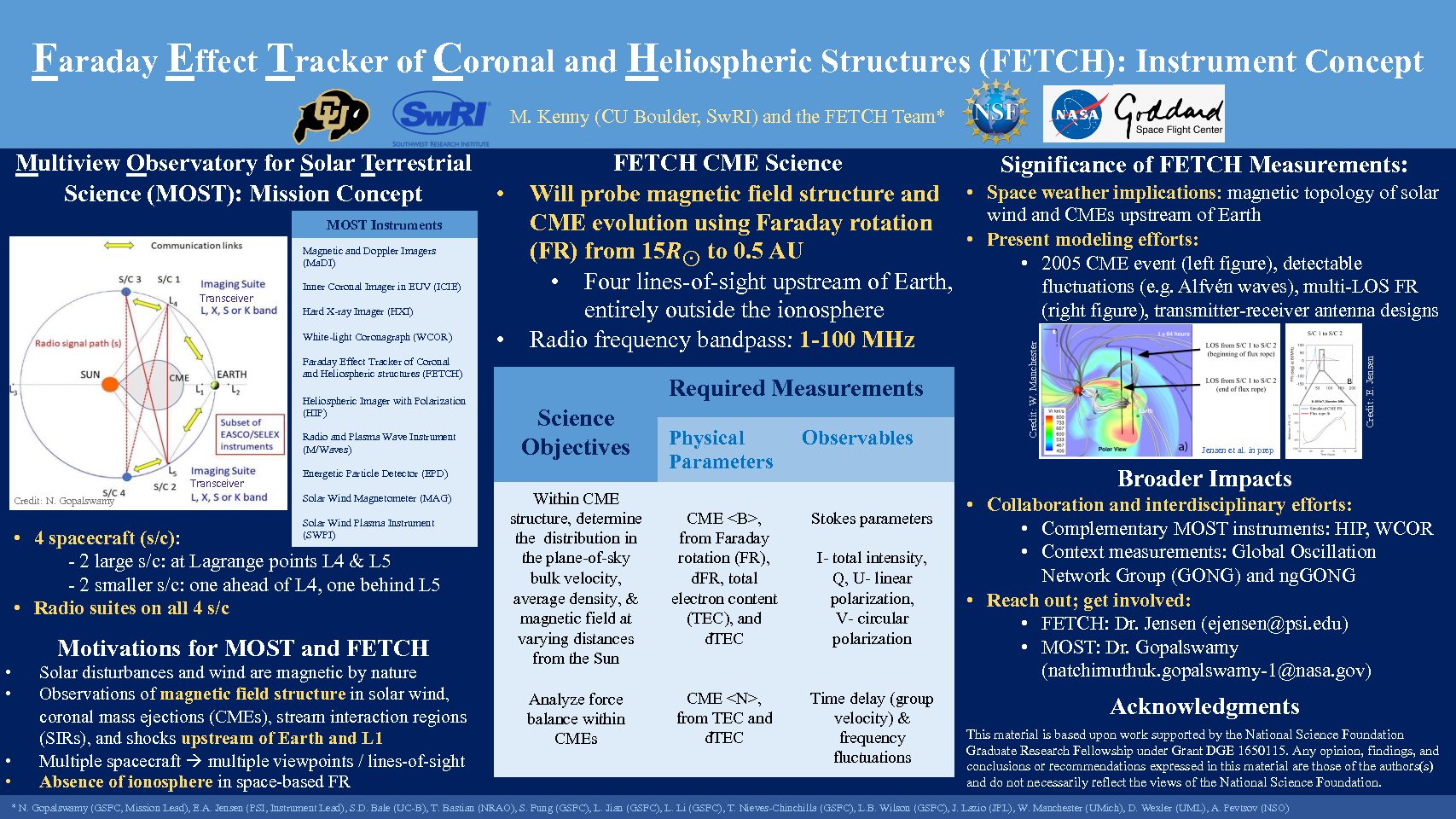
Authors: Megan Kenny (University of Colorado, Boulder) Liz Jensen (Planetary Science Institute) Shing F. Fung, Lynn Wilson III, Lan Jian, Nat Gopalswamy, Teresa Nieves-Chinchilla (HeliophysicsView More
Authors: DeOndre Kittrell (NASA GSFC), Katharine Reeves (Harvard-Smithsonian Center for Astrophysics We conduct detailed thermal analysis of the plasma sheet region during the post-eruption phaseView More
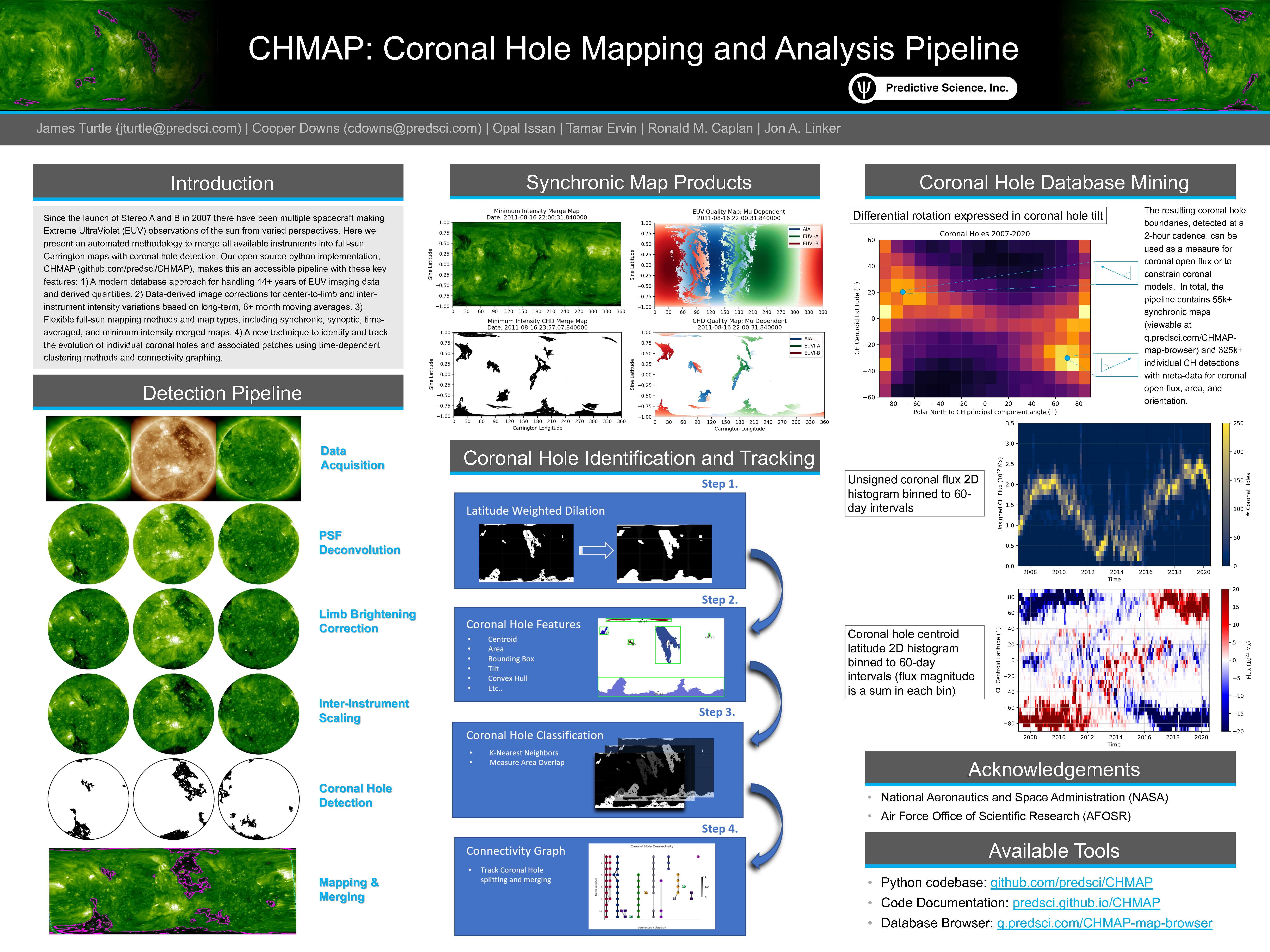
Authors: James Turtle (PSI), Cooper Downs (PSI), Opal Issan (PSI), Tamar Ervin (PSI), Ronald M. Caplan (PSI), Jon A. Linker (PSI) Since the launch ofView More
Authors: Michael Shay(University of Delaware), Tulasi N. Parashar (Victoria University of Wellington), William H. Matthaeus (University of Delaware) Classic picture of magnetic reconnection has shownView More
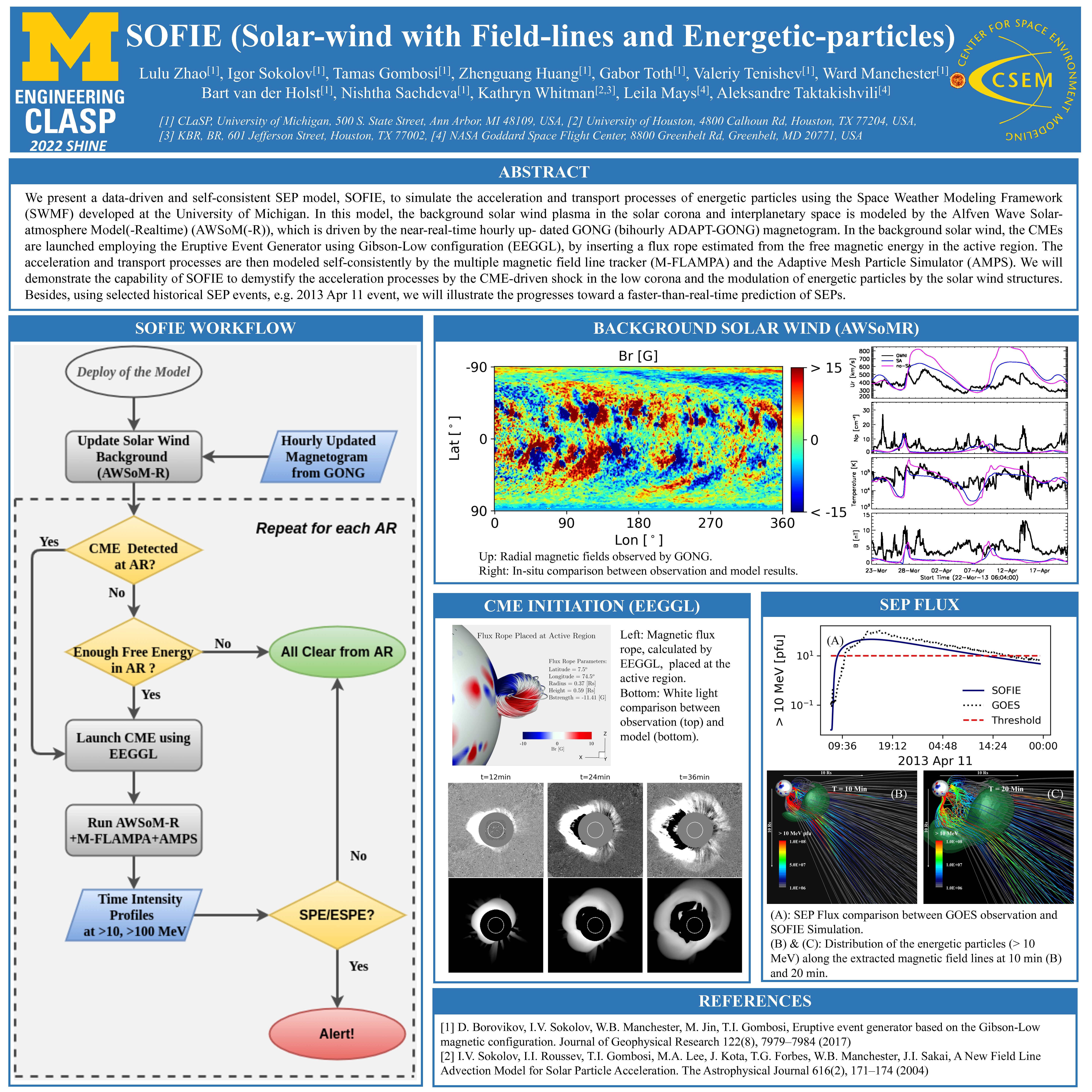
Authors: Lulu Zhao (University of Michigan), Igor Sokolov (University of Michigan), Tamas Gombosi (University of Michigan), Zhenguang Huang (University of Michigan), Gabor Toth (University ofView More
Authors: John D Richardson MIT Authors C Alan C Cummings CALTECH B Leonard F Burlaga NASA Goddard Space Flight Center John D RiJ. D. RichardsonView More
Authors: Matthew West (Southwest Research Institute), Federica Frassati (National Institute of Astrophysics – Astrophysical Observatory of Turin), Monica Laurenza (Istituto di Astrofisica e Planetologia Spaziali),View More
Authors: Erick Powell (Boston University), Merav Opher (Boston University), Marc Kornbleuth (Boston University) Neutral hydrogen in the hydrogen wall (beyond the heliopause) and heliosheath absorbView More
Authors: Bryan Yamashiro (University of Hawaii), Xudong Sun (University of Hawaii) The Sun’s polar magnetic fields impart strong constraints on the internal dynamo process, theView More
Authors: Gabor Toth (University of Michigan), Nishtha Sachdeva (University of Michigan), Lulu Zhao (University of Michigan), Bart van der Holst (University of Michigan), Igor SokolovView More
Authors: James Staeben (UVA/NASA GSFC), Nick Arge (NASA GSFC), Shaela Jones (NASA GSFC/CUA) Accurate forecasting of space weather grows increasingly important as we move towardsView More
Authors: Colby C. Haggerty (University of Hawaii, Manoa), Michael Shay (University of Delaware), Tai Phan (University of California, Bekeley), Paul Cassak Magnetic reconnection in currentView More
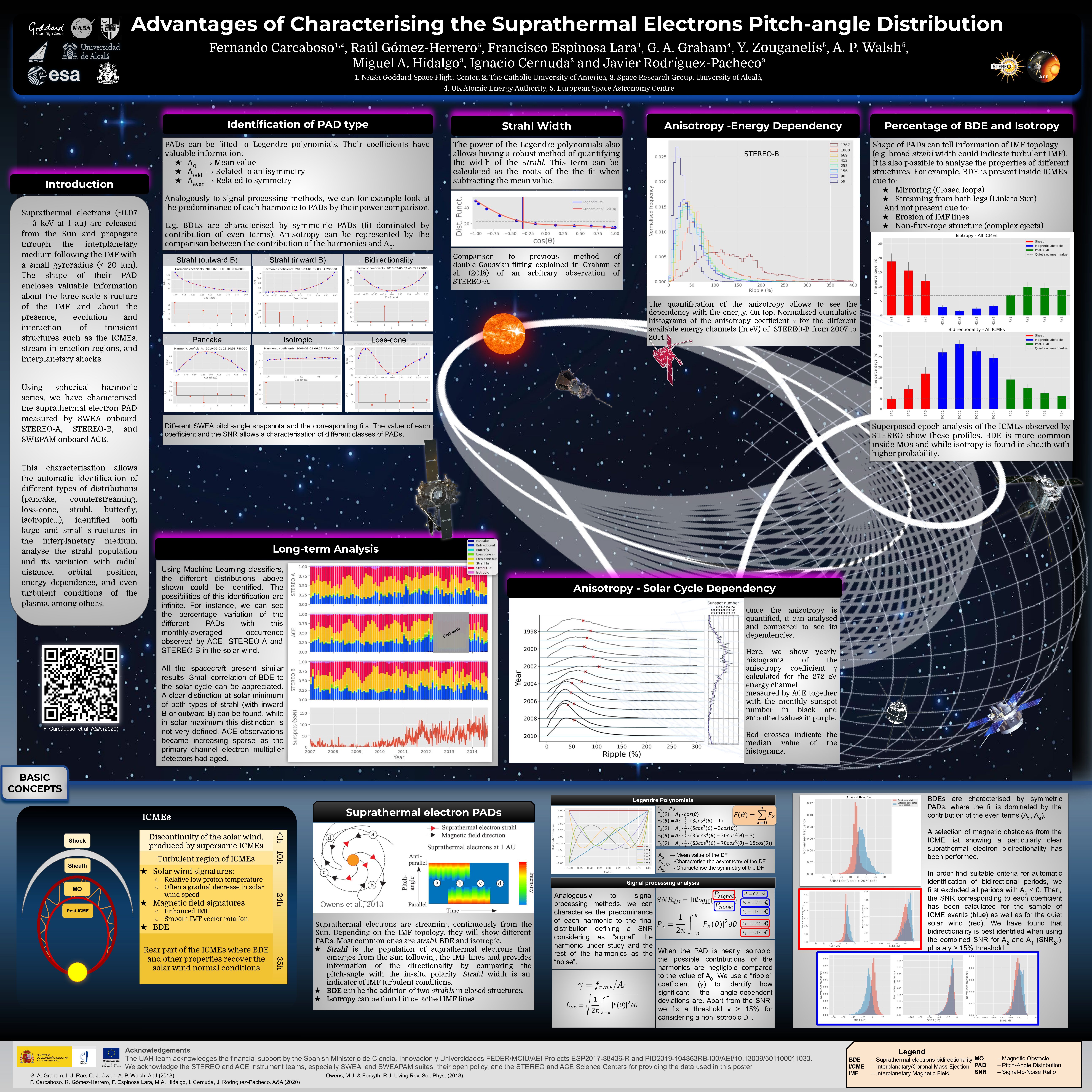
Authors: Fernando Carcaboso (NASA Goddard Space Flight Center, The Catholic University of America), Raúl Gómez-Herrero (Space Research Group, University of Alcalá), Francisco Espinosa Lara (SpaceView More
Authors: Jacob McLaughlin (University of Iowa), Fred Skiff (University of Iowa) Neutral calcium plasma is particularly interesting for studies of ion wave dynamics. Apart fromView More
Authors: Tom Schad (National Solar Observatory), Alexandra Tritschler (National Solar Observatory), and the DKIST Science Team The chromospheric and coronal polarimetric capabilities of DKIST, inView More
Authors: Shaheda Begum Shaik (George Mason University), Mark Linton (Naval Research Laboratory), Phillip Hess (Naval Research Laboratory), Sarah Gibson (National Center for Atmospheric Research) WeView More
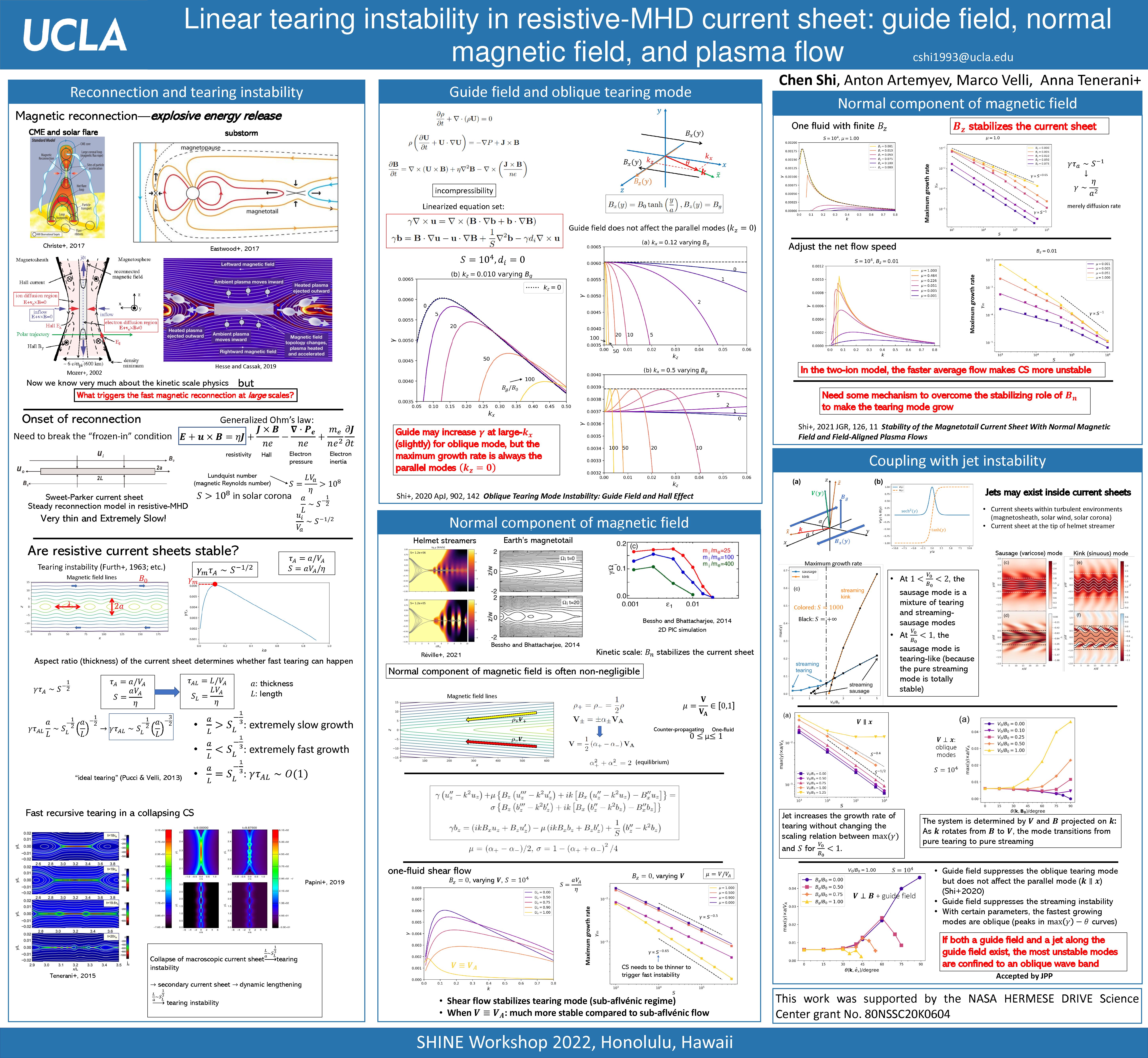
Authors: Chen Shi (UCLA), Marco Velli (UCLA), Anna Tenerani (UT Austin), Anton Artemyev (UCLA) The stability problem of current sheets is one of the mostView More
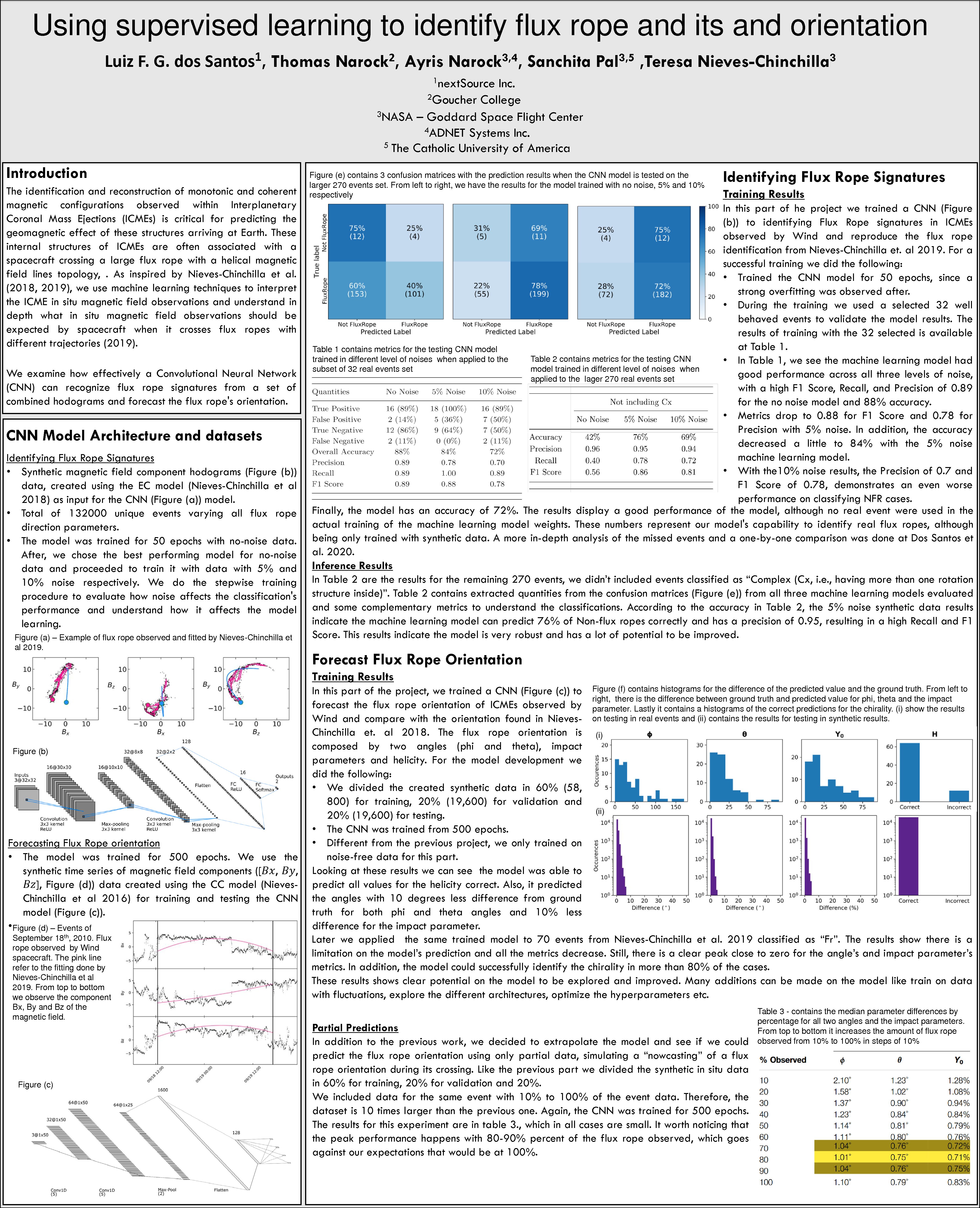
Authors: Luiz F. G. dos Santos (nextSource Inc), Thomas Narock (Goucher College), Ayris Narock ( NASA GSFC/ADNET Systems Inc), Sanchita Pal (NASA GSFC/University of Helsinky),View More
Authors: M. A. Dayeh (SwRI), M. J. Starkey (SwRI), R. Bučik (SwRI) and M.I. Desai (SwRI) The interplanetary Suprathermal (ST) ion population is unambiguously thoughtView More
Authors: Sahanaj Aktar Banu (University of New Hampshire, Durham, New Hampshire, United States), Reka Winslow (University of New Hampshire, Durham, New Hampshire, United States), EmmaView More
Authors: Chen Shi (UCLA), Marco Velli (UCLA), Anna Tenerani (UT Austin) Solar wind is highly turbulent and contains fluctuations on all scales which are dynamicallyView More
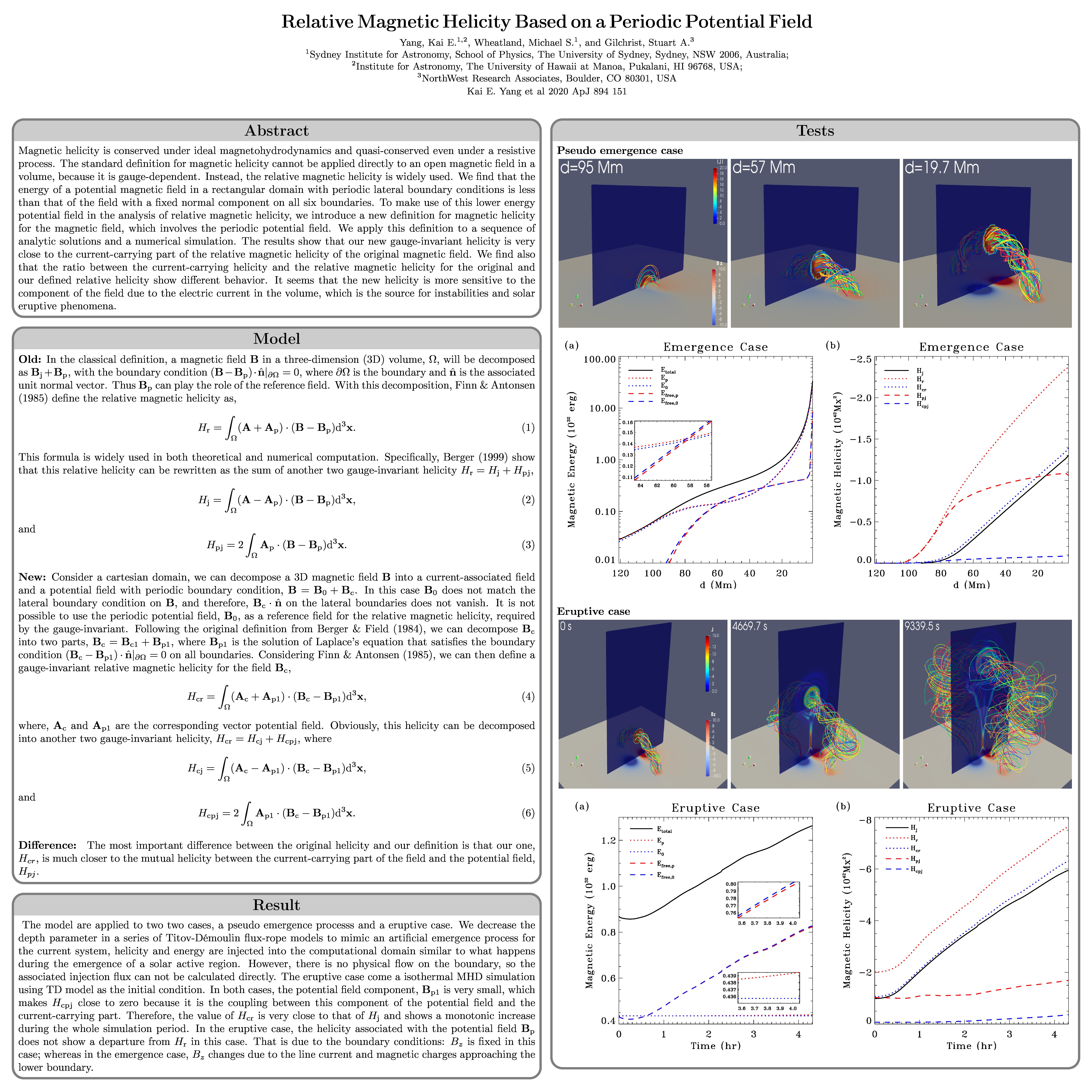
Authors: Kai Yang (Institute for Astronomy, University of Hawaii at Manoa) Magnetic helicity is conserved under ideal magnetohydrodynamics and quasi-conserved even under a resistive process.View More
Authors: Chika Onubogu (Boston University), Merav Opher (Boston University), Marc Kornbleuth (Boston University) The properties of the solar wind vary with the solar cycle, evolvingView More
Authors: Alberto Sainz Dalda (BAERI/LMSAL) This session will start with a critical review of the usage of machine learning (ML) and data assimilation (DA) inView More
Authors: F. Fraternale (University of Alabama in Huntsville – CSPAR), R. K. Bera (University of Alabama in Huntsville – CSPAR, USA), N. V. Pogorelov (UniversityView More
Authors: Xiaohan Ma (Boston University), Merav Opher (Boston University) The heliosphere is a vast region surrounding the Sun that marks the outer limits of theView More
Authors: Alicia K. Petersen (Air Force Research Lab, NRC), Stephen M. White (Air Force Research Lab, Kirtland AFB), Stephen W. Kahler (Air Force Research Lab,View More
Authors: Dylan Conner (WVU), Katherine Goodrich (WVU), Justin Bowman (WVU), Justin Riggs (WVU) Parker Solar Probe, while engaging in a gravity assist maneuver with Venus,View More
Authors: Ashraf Moradi (University of Arizona), Joe Giacalone (University of Arizona) Solar protons with rigidities higher than 1 GV (432 MeV) penetrate Earth’s atmosphere, generateView More